
Pure Personalism Redux [2]
The actual exercise of chieftain personal power

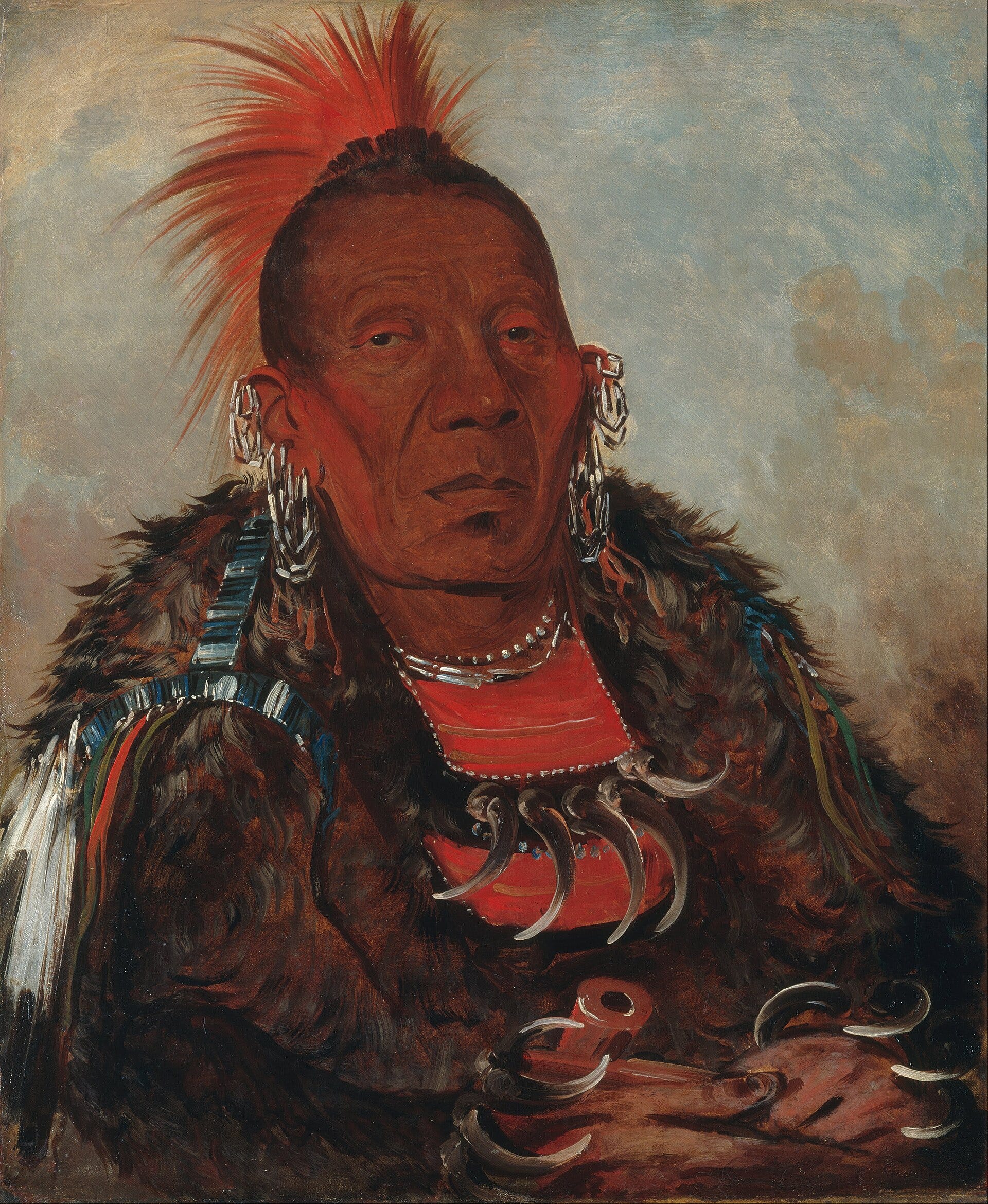
Chiefs in theory..
As the term itself suggests, ‘chiefs’ are the personification of personal rule. Today’s chiefs might group together periodically as councils of chiefs and seek in elaborate ways to give the appearance of consensus for their decisions among their people. In reality they are personalistic rulers. Chiefs are considered here in the literal sense of individualised powers of command and the corresponding compulsion to obey. Chiefs are the direct evolutionary inheritors of alpha male primate powers of coercion. They set the agenda. They decide when the ‘consensus’ is reached and ‘discussion’ ceases.1
With the exception of overriding ultimate powers of territorial states within which they inevitably exist today, the powers of a genuine (as opposed to a titular) modern ‘Big Man’ chief is unmediated by countervailing institutions. In their modern guises these atavistic manifestations of prehistoric modes of control almost always exist on the margins of much larger territories that can be categorised as elitist state societies, i.e. facade democracies, one-party states, and states without real separations of power.
The conceptual question that concerns us here is relevant only to genesis evolution when Dominators and Levellers preceded Societies. Prehistoric groups were free to experiment with a ‘third way’, i.e. the ‘communalistic’ small scale Society. They did so because Dominators and Levellers hindered the progress that could be achieved only with the freedoms and competition of visible and audible public debate. Founders of Societies created an artifice of decision making that furthered an impersonal interest in the survival and progression of their unit. Against the backcloth of this assumption we now consider the neoprimate chief, the person who Societies explicitly rejected.
The exercise of personal power
Chiefdoms are often discussed as regional networks of groups. Bigger chiefs and smaller chiefs hold councils together for purposes of decision making. Sometimes the chiefs are related to one another within large and diffuse families. In conceptual terms, however, chiefdoms are understood to be discrete bordered units in their own right. This is where the phenomenon of purely personalised decision making arises.
Prehistoric chiefdoms shared some or all of the characteristic sources of chiefdom power identified by Irving Goldman in Polynesia, which some anthropologists regard as universal traits of chiefdoms.2 Firstly, personal chiefly power can rest on a claim to supernatural energy or ‘mana’ acquired at birth or through worldly achievements (e.g. in battle). Many hereditary chiefs are regarded as the descendants of gods. Secondly, a chief has practical expertise or talent in management of people and the provisioning of goods and services. They must be outstanding organisers. Thirdly, a chief must be brave and tough. Often they are warriors with experience of defence or expansion.
Whether the incentives for becoming a chief are the attainment of ‘power’ or ‘status’ is a moot point. Arguably one begets the other. The same goes for their ability to accrue wealth, which often correlates with the chiefs military capabilities.3 The one certainty is that although rivalrous competition for leadership (for the position of ‘chief’) is not permitted within the chiefdom, chiefs frequently compete fiercely with other chiefs.
The source of a chief’s personal power over a group can be derived or created and articulated in various dimensions. For example, his status may derive from hereditary kinship, the quantity of his wives, his purported supernatural talents, his bravery and excellence as a warrior, charismatic oratory, skilled interpersonal negotiation, and his intelligence for astute and rapid calculations for the achievement of public ends. In some cases the methods of selection might be arbitrary, based on magic or luck.4
The title of ‘chief’ or ‘Big Man’ itself explains the immemorial natural phenomenon of alpha male human dominance. Reminders of the primate origins of chiefs and of the evolutionary sequences of sexual and natural selection are not hard to find. More or less the same logical instinctual behavioural patterns prevail among chimpanzees.
the attractiveness of real control over wealth, power, and women (for it is the Big Man who is polygynous) motivates the leader to act in such a way as to maximize his personal power and reproductive success5
The business of dominance
Chiefs are wealthier than everyone else. They became wealthy because they were chiefs, or they became chiefs because they were wealthy. Successful chiefs operate like entrepreneurs running a business enterprise. These chiefs organise their domination on the basis of unequal access to, and control of, the material means of production, exchange networks, storage facilities, and the financing of ventures. In the past, the militancy of chiefdoms in war between neighbouring groups clinched control.6 Nowadays, the preservation of chiefly power requires business acumen.
The Big Man is both an individual entrepreneur and a group spokesman. In the first role he uses the resources available to him through the manipulation of his extensive interpersonal network based on marriage, alliance, and exchange. By aggressive and calculated action he comes to control a high percentage of the exchange and production of valuables … The services provided by leaders to local groups include the management of large-scale subsistence activities, the conduct of long-distance trade, the storage of food and wealth objects, and the maintenance of alliances through debt-credit relations. At the regional polity level chiefs provide the analogous services, whose nature varies with the form taken by intensification in various environments. Less variable is the nature of control that rests on ownership of critical productive resources, technologies, and religious power. The long-term intensification of the economy increases the need for management, the ease of ownership, and thus the dependency of the local commoners on their leaders. … A chief’s control translates into an ability to manipulate the economy in such a way as to derive from it a surplus that can be invested. He is granted the power to control or monopolise economic management under certain specific conditions … Most chiefdoms are agricultural, and control over agricultural production makes possible the surplus that finances their emergence and operation.7
Decision making and clientelism
This political chiefdom ‘business model’ may be the purest type of ‘personal rule’ in the world today. It is certainly one that feels at home in the underdeveloped elitist state societies of Africa and parts of Asia — facade democracies and one-party states with no separations powers. But we must add to it the dimension of decision making procedures. The Dominator model does permit far greater and more genuine public discussion than the Leveller model. However, public discussion within chiefdoms, as also among Levellers, is not competitive. Periodic large scale discussions are stage-managed and their purposes are two-fold — to obtain vital information about the potential methods and outcomes of a given action from those who have relevant and direct knowledge, and to create the appearance of a consensus of opinion within the group. Successful chiefs are those who have the personality and skills for managing other men. These public meetings allow him and others to show off their oratorial talents and their knowledge. Genuine airings of disagreement are rare. The emphasis is on burnishing their existing status and influence differentials in order to reinforce the functional consensus upon which the chiefdom is firmly founded and legitimised.
The scope for genuine contestation in opinion formation is circumscribed by patron-client relationships. The chief is wealthy. The whole group relies on his patronage and brokerage. Patronage networks are widespread and make it very difficult for anyone to express dissent. Patrons organise their clients well ahead of decision making councils, which means that many of the talking points witnessed in public meetings are already scripted. Chiefs are patrons and exert influence over their clients in various ways.8 They ‘trade’ their power and prestige for popular consent. Neoprimate dominance is rarely voluntary cooperation. It is usually ‘my way or the highway’. In prehistory this may have meant a choice between obsequious deference and an axe in the head.
The decision making process
Mervyn Meggitt’s classic account9 of the process of political discussion within New Guinean chiefdoms draws attention to a few of the subtleties that restrict the scope of discussion. Group members who are likely to disagree with a resolution are unlikely to be invited to attend, and may explicitly be excluded. Within his zone of jurisdiction, the “major Big Man” sets the whole agenda for discussion. The chief decides how a consensus is to be reached, and when the discussion will cease. This does not mean that the discussion has no purpose at all. Though “deep and irreconcilable divisions of opinion do not emerge often”, unlike their Leveller counterparts — who strove to beat around the bush in preference to getting to the point — in chiefdoms people do often relish a big public discussion: “Most men are ready to make their points at length and with elaborate oratorical flourishes”. By means of all this rhetorical feedback the chief is informed of the facts and opinions that are pertinent to the matter. As a result he may modify his point of view. But at a certain stage the chief curtails the process.
when the Big Man believes that consensus is close at hand and that further talk will add nothing of value, he incisively summarises the main arguments, indicates which have been rejected, and finally announces the decision10
In some respects chiefdom Dominator groups are like Leveller groups. People are intolerant of chiefs whose behaviour becomes too domineering. The scope for pure dominance is circumscribed. It is not unusual for chiefs to be deposed. Therefore chiefs restrain themselves. They articulate their commands euphemistically with varying degrees of subtlety in order not to provoke the hostility of group members.
Imagining the prehistoric chiefs
In their modern guises there are degrees of difficulty in classifying these atavistic manifestations of personalised group control. Erring on the side of caution it would be wise to assume that in prehistory conditions were far tougher. Language capability was more rudimentary, and customs and conventions were not deeply established. Yet it is still possible to construct an ‘ideal type’ of Dominator group. In the plainest conceptual terms the chiefdom was an instrument of control. On the other hand, there was consultation, much as a small business owner seeks feedback from his employees before making a decision. Most importantly, the prehistoric chief enjoyed singular personal power until he was deposed. Deposition was frequent and usually violent.
Legitimation in prehistoric neoprimate contexts is simply the group recognition of the justifications for an alpha male’s pure personal dominance, judged according to the most essential raw criteria for absolute coercive leadership — physical superiority, dominant personality, and a repeatedly demonstrated superior intelligence for astute judgements that are often made instinctively, without need for diffuse deliberation among advisers, and which at a minimum can preserve group cohesion and welfare.
In prehistory there existed no institutionalised hereditary rules of succession for chiefs. The authority of neoprimate group dominators, then and now, is not perpetual. Their power is not set in stone. Chiefs therefore cultivate consensus among their followers. Their prehistoric legitimacy would have been short-lived if they had regularly gone against majority group opinions on major questions of social order, war, or migration and subsistence. If they failed to exercise good judgement, or to collaborate and coordinate among followers, or if they showed weakness, they could be deposed.
Chiefs might be toppled at any time by stronger and smarter upstarts. In many cases the benefits of personalistic dominance, no matter how violent and arbitrary, probably outweighed the disadvantages for most group members in highly adverse prehistoric environments where scarcity and conflict were common. Nonetheless, those who fell out of favour with the chief, or were frightened or disgruntled by his unpredictable and unconstrained behaviour, might have been bold enough to leave the group and explore non-dominance alternatives. Only two viable historical alternatives existed, ‘networked levelling’ or ‘society’, both of which could have offered short run potential for simple and static subsistence on terms equivalent to those offered by chiefdoms.
Evolutionary chiefs
The important point to keep in mind is that both Dominators and Levellers were the catalysts for Sociation. Society formation was motivated by the rejection of one or the other. The chiefdom was always the better of the two precursors in purely functional terms because life among chiefs was competitive. Over the long run in every historical field — be it governance, economics, science and philosophy — competition has been the impetus for discovery of new opportunities and for the acquisition of knowledge and skills. Living longterm with nervous competition-averse Levellers could damage a person’s motivation and cognition. Despite the degradations of life in subservience to a chief, moreover, no-one could complain about the lack of competition in a chiefdom.
Members of the chiefdom group competed for the attention, favour and patronage of their chief. The chief himself was permanently anxious about potential competition from usurpers. Ambitious aspirants to the chieftainship were alert for opportunities. All chiefs were in permanent status, political, economic and territorial competition with neighbouring chiefs. Given the vulnerability of his un-institutionalised position a chief lived in fear of counter coalitions of rivals. This was reason enough in itself for a chief consult before making his decisions. As a result of competition chiefs became clever at defensive coalition making. They created militant warrior corps or defence forces. All in all, Dominators were radically more ‘evolutionary’ than the Levellers.
Non-evolutionary chiefs
In chieftainships people did at least learn to collaborate and coordinate politically. This political skill was rapidly lost among those who chose to ‘level’ rather than ‘submit’. The political weakness of pure personal rule was the theatrical charade of consensus formation under the tight control of chiefs. This was not a genuine competitive airing of diverse opinions and information. Spectators and participants did not learn the art of give-and-take political persuasion, a process of generating consensus with counter-proposals. Chiefs were not good at creating consensus. Chiefs arrived with a decision already in mind. They listened to the group, tested the evidence, sought to confirm the validity of their proposal among known allies. But in the end they alone made the final decision. At best, the meetings were weathervanes of public opinion. The only real ‘competition’ was to please the chief and impress one another with elegant oratory.
Dominators did at least provide experience of the practise and art of routine massed public participation and representation in discussion, which was virtually lacking among Levellers. Language and cognition improved by collaborating, coordinating and listening even under controlled conditions of subservience. Prehistoric people weighed their animosity toward the chief and stresses of inequality and dominance instability against the benefits — more general safety and stable subsistence than could be obtained alone or among Levellers who were too frightened to discuss.
Legitimate representative chiefdoms
The question of whether chiefdoms were ‘evolutionary’ can be answered in the affirmative only when they were multiple legitimate representatives of groups who joined together as equals in a decision making process whose outcomes were binding upon settlements. This occurs to some extent in contemporary Polynesia. Decisions require involvement by several groups whose chiefs coordinate. In this narrow context none can act like despots. None is a ‘society’ because only some types of decisions are treated (e.g. preparations for war), and these multiple groupings are not subject to a single set of bordering, bonding and binding conditions of representational unity.
An equivalent process is depicted in the historical accounts of Homeric settlements governed by assemblies of powerful ‘leader’ householders, where no single individual held total power. The householder was an autocrat over the administered household with its own small settlement in proximity to similar settlements. He represented the house or settlement in a council of similar householders. Council decisions required consensus and were binding among all householders. This model may be compatible with depictions of governance in the ancient Near East ten thousand years before the agricultural revolution and the invention of administration. I treat these as the middle and later phases of the third type of society, and call them the ‘coordinated’ societies.
Genuine coordinated society is a territorial bonded and bound unity where designated coordinators compete and compromise with others of similar ‘representational’ status — effectively a limited separation of powers without a single apex ruler. Leaderships may become hereditary or ranked by achievement (e.g. in battles) with titles. Rule enforcement and all decisional group activity is coordinated by an assembly of chiefs. Participation is restricted. Leading individuals in this ‘persons over group society’ evaluate their representative coordinators before consenting to being influenced by them. There is definite accountability and legitimacy. In contrast, no one ‘consents’ to the traditional neoprimate personalistic dominator chief who is accountable to no one.
Conclusion and overview
The most important feature of a chiefdom, now or in prehistory, is obedience to the person, not to the group, not to the group’s rules. Customary (now sometimes legal) authority is not shared with parallel or intertwined powers within a chieftainship. Highly personalised patron-client brokerage relationships tend to be operative. The chief is at the centre of every group decision, but influence over him is very unequal.
Despite varied legitimating nuances of chieftainships, where Big Men today oversee collaborative and coordinative methods for achieving a semblance of consensus this political chieftainship model remains the purest type of ‘personal rule’. Because all powers of compulsion are individualised in one person these groups cannot be called ‘societies’ even if participative decision making forums exist. In all the contemporary cases chiefs exist politically as subtypes of elites within territorial states that are most properly classified as complex elite societies (rather than as giant chiefdoms). As such, the modern versions can be dealt with much later in our overall history of societies.11
A prehistoric Dominator could consult within the group in private or in public in order to manufacture ‘consensus’ on decisions. Bravado spectacles of engineered consensus legitimised chiefly dominance over acquiescent, powerless tribal peoples whose eternal life choices were customarily reduced to ‘domination’ or ‘levelling’. If a chief presides over a large group he may form a team of personal clientelistic advisers. He might delegate powers to enforce his decisions. Technically, however, the chief is a ‘one-man band’. In political-sociological conceptual terms the chiefdom is a ‘personal polity’. There is no larger mechanism for representation beyond a single chief. Public consultations are means of information processing, occur entirely at the discretion of the chief, and are brought to an end when the chief finally reaches his own decision.
By virtue of a man’s supernatural or hereditary status, his wealth, his demonstrated expertise or force of personality, the group voluntarily consents to his pure personal rule. A successful enduring chief must take into account the ‘impersonal’ interest of the group. However, this is a ‘calculation’ that occurs in the mind of one person. There is no further mechanism for the discovery, distillation, and diffusion of a general will or common good of the group. There is no offsetting ‘institutionalised’ mechanism of communalisation, coordination, administration or participation that is a constraint, control or counterweight. Even in the present day a chiefdom is the purest type of personal rule. We can justifiably regard it as the symbolic antithesis of ‘society’.
As I attempt to theorise them (upcoming), the first three types of society repressed the primordial ‘natural’ instinct for personal rule and personal networking. Suppression took the form of the ‘artificial’ device of public argumentation. In the final prehistoric society, rulerships with hierarchical authority and formal obligations to obey were introduced. By then, given the growing magnitude and complexity of society, it was impossible for pure personalism to prevail in the face of countervailing institutions.
By Michael G. Heller
My Theory & History of Society began chronologically on Substack in Sept 2025 with The Politics of Becoming Human. Research began in 2020 and is archived here from 2022.
Feedback, enquiries, copyright
Reply to the email or HellerFiles@gmail.com. This publication is recorded for referencing and copyright under the ORCID publications ID https://orcid.org/0009-0006-0935-0826
Illustration
Wah-ro-née-sah, The Surrounder, Chief of the Tribe by George Catlin 1832
Descriptions and analyses of the personalistic nature of contemporary political chiefs and chiefdoms can be found in Timothy Earle, A Primer on Chiefs and Chiefdoms, Eliot Werner Publications 2021; Allen Johnson and Timothy Earle, The Evolution of Human Societies: From Foraging Group to Agrarian State, Stanford University Press 2000; Christopher Boehm, Hierarchy in the Forest: The Evolution of Egalitarian Behaviour, Harvard University Press 1999; Paul Roscoe ‘The Emergence of Sociopolitical Complexity: Evidence from Contact-Era New Guinea’ in Richard J. Chacon and Rubén G. Mendoza (eds.) Feast, Famine or Fighting? Multiple Pathways to Social Complexity, Springer 2017; Kent Flannery and Joyce Marcus, The Creation of Inequality : How our Prehistoric Ancestors Set the Stage for Monarchy, Slavery, and Empire, Harvard University Press 2012
Kent Flannery and Joyce Marcus, Creation of Inequality: How Our Prehistoric Ancestors Set the Stage for Monarchy, Slavery, and Empire, Harvard University Press 2012 (Chapter 11)
Paul Roscoe, ‘The Emergence of Sociopolitical Complexity: Evidence from Contact-Era New Guinea, in R.J. Chacon and R.G. Mendoza (eds.), Feast, Famine or Fighting? Studies in Human Ecology and Adaptation, Springer International 2017
“Our House of Commons had its roots in local gatherings like those in which uncivilized tribes select head warriors. Besides conscious selection there occurs among rude peoples selection by lot. The Samoans, for instance, by spinning a cocoa-nut, which, on coming to rest, points to one of the surrounding persons, thereby single him out. … In [other] cases there was belief in supernatural interference: the lot was supposed to be divinely determined.” Herbert Spencer, Principles of Sociology: Vol. I–IV:1521
Allen Johnson and Timothy Earle, The Evolution of Human Societies: From Foraging Group to Agrarian State, Stanford University Press 2000:228
Herbert Spencer, Principles of Sociology: Vol. I–IV:passim
Allen W. Johnson and Timothy Earle, The Evolution of Human Societies: From Foraging Group to Agrarian State, Stanford University Press 2000:228, 267
Elman Service, Origin of the State and Civilization: The Process of Cultural Evolution, W. W. Norton 1975; Allen W. Johnson and Timothy Earle, The Evolution of Human Societies: From Foraging Group to Agrarian State, Stanford University Press 2000:passim
Mervyn Meggitt, Blood Is Their Argument: Warfare among the Mae Enga Tribesmen of the New Guinea Highlands, Palo Alto, CA: Mayfield Publishing Company 1977
ibid:78
Type 7 Elitist Society. State over society. Elite differentiation. Facade democracies, one-party states, statism. The state is unitary and personalistic. Unrepresentative elites compete for state-derived powers and privileges. In underdeveloped states power is ceded to elites. Private power produces a vacuum of public power. The constitutionalism of society is perpetually paralysed. The state remains unitary and its influence remains unchecked.