

Like Immanuel Kant, I aim to contextualise the founders of the first society in the most favourable environment for evolutionary progression. During the initial preparations for this project two realistic ‘imaginings’ impressed themselves on my mind. The first is the archeologist Hans J. Nissen’s depictions in The Early History of the Ancient Near East (1988) of the probable course of transitions from hunter and gatherer cave-dwelling in the Zagros and Alborz mountains (present day Iran) to early cultivation settlements on the alluvial plains of Mesopotamia (present day Iraq).
More broadly, the region between the Caspian Sea, the Mediterranean Sea (Levant) and the Persian Gulf between 9000-2000 BCE one can trace — in Nissen’s words — “all the external factors required of the natural environment for the different stages of development of organizational forms in the smallest possible area”. There is evidence enough for realistic suppositions wherever longterm settlement occurred. The earlier hunter gatherer existence in caves and valleys of the mountains is however much more speculative. The most useful preserved evidence of forager lives is found inside caves.
My second embryonic source for a Kantian ‘imagining’ of hunter gatherer lives before recorded history is William Golding’s novel The Inheritors, which helped win him the 1983 Nobel Prize in Literature. In both books groups of foragers move seasonally between mountain caves and lowland valleys, plains and seas in search of plant and animal food subsistence. When Golding’s group arrive at their spring cave they find traces of ice that had not been present in previous years, whereas Nissen conjectures foragers would rarely have returned to the same cave more than two or three times. There are a great many caves in this region. Local foragers were spoilt for choice.
The first chapters of Golding’s book offer plausible hypothetical accounts of ideal type sociational interactions among foragers in terms of individual differentiations of age, sex, cleverness, personality and physique. I will draw on his fictionalised insights in my reconstruction of ideal politics and decision making in the first society.
Prior to speculating about human interactions we require a realistic account of their physical environments. Nissen offers a near-perfect scenario for the purpose. When selecting sites for seasonal habitation the “optimal situation” was determined by the availability of a sufficient variety of food sustenances within easy reach, and over the longest possible time period in order to reduce the frequency of group displacements. As Nissen informs us, such sites are not difficult to find in the Near East. Ideally, the group finds a cave in the vicinity of two or three distinct ecological units (ecotopes) overlapping or near to each other, providing a real variety of landscape, animals and plants. Elevated terrains provide this kind ecological diversity at close range. Indeed, the archeological traces of early humans are more often found in mountainous areas.
Nissen singles out the region around the Kamarband cave [#11 in the map below] southeast of the Caspian Sea as “nearly optimal” — “The site, halfway up mountains rising relatively steeply from the coastal plain, allowed the inhabitants freely to exploit animals and plants from the coastal plain, from the slopes of the mountains, and from the higher mountainous regions, as well as from the high plateaus”.
Had Kant been looking for a credible pre-religious equivalent of Eden in which early humans might be materially comfortable enough to be permitted the stability, time and energy for political experimentation with sociational innovations, a seasonal cave-dwelling existence in the vicinity of Kamarband would have served his purpose well.
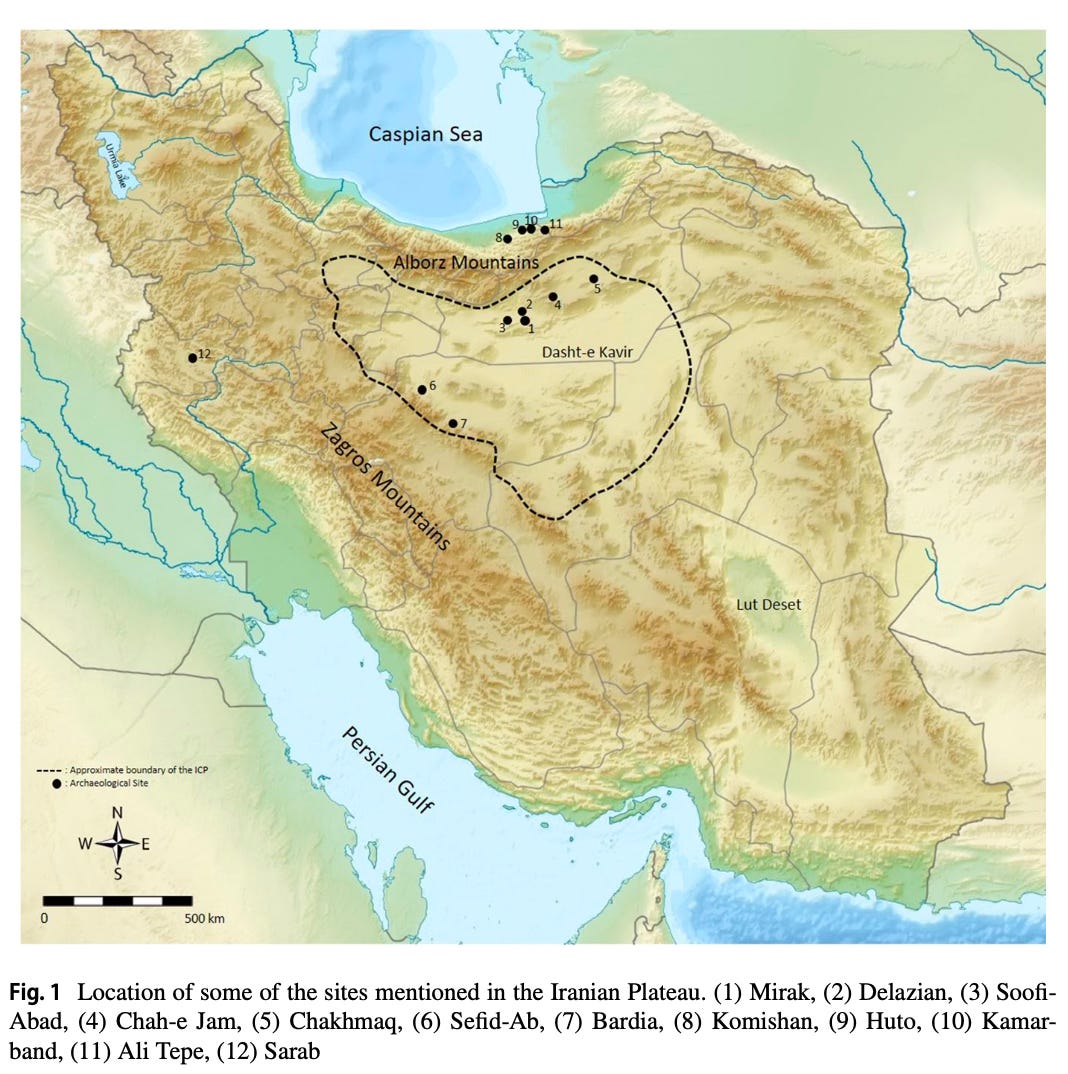
Given that the Late Glacial Warming was already underway by about 16000 BCE, we can be certain that survivable and productive human habitation in the mountain range lying between the Caspian Sea and the Mesopotamian plains was feasible — as it also was in the adjoining Levant along the eastern Mediterranean shores. To illustrate, by 10,000 BCE mean temperature averages in the south of the Caspian Sea and north of Mesopotamia stabilised at a level not unlike today in the Mediterranean or the coastal plains and mountain ranges behind Los Angeles or Sydney. Present-day mean annual temperatures of 12-14 degrees centigrade in the Zagros mountains and plateaus are also applicable to the Late Glacial and can be used to estimate human choices of flora and fauna 15,000 years ago. The temperate forests inland and south of the Caspian Sea offered ideal conditions for long term occupation, and attracted considerable inward migration. Epipalaeolithic (20,000-13,000) nomadic hunter-gatherers expanded right across the grassland, woodland and wetland habitats of Zagros and Alborz ranges, as well as into the large arid central plateau between the mountain ranges. Although foragers were spread thinly across the landscape there is evidence of prolonged and repeated occupation in these cave locations during our target timeline 20,000-10,000.
Advanced tool usage during this period consists of lithic technologies made from silica and obsidian — chipped knap tools, scrappers, burins, borers, drills, perforators, denticulates and many blades, some of them hafted in wood. There is evidence of sea shells having been transported from coastal areas to be used as bead ornaments. Finds of obsidian and shells suggest the possibility of long-range exchange networks from Anatolia to the Levantine and the Persian Gulf. Animal prey included small and large birds, fish, wild boar, wild sheep, wild asses, wild goats, gazelle antelopes, deer, voles, bats, wolves, foxes, hares, hedgehogs, rodents, occasional rhinoceros or bear, and seals in areas along the Caspian Sea. Cave residues show signs of the meats being cooked, and of systematic marrow extraction and marrow processing. Base camps were often utilised for different purposes, e.g. butchery or selective species specialisation.
All in all, there is ample evidence of a rich and highly varied diet. The range of fauna in single locations often reflect multiple ecotones — from forest to grassland, shrub-land, wetlands and desert habitats. Animal bones found in the caves sometimes show evidence of decoration, such as ochre colouring. The evidence of edible fauna is much sparser, but gathered plants included fruit, many types of cereal grains, pulses, seeds, roots, sedges and tubers, as well as pistachio and almond nuts. Fuel for cooking was taken from almond trees and oak shrubs found close to the caves. In some locations whole animal food carcasses were transported to the cave for processing, suggesting caves were used seasonally and for lengthy periods of time when hunted prey were found nearby. Depletion of such resources (e.g. goats) through intensive exploitation must have been a major reason for seasonal human mobility, in addition to changes in climate temperatures. Larger ungulates with high yields of meat were less abundant and were hunted over extensive distances, possibly for purposes such as ceremonial feasts and gatherings between multiple groups. Hunting required knowledge and expertise. Distribution of large amounts of meat must have been a source of prestige.
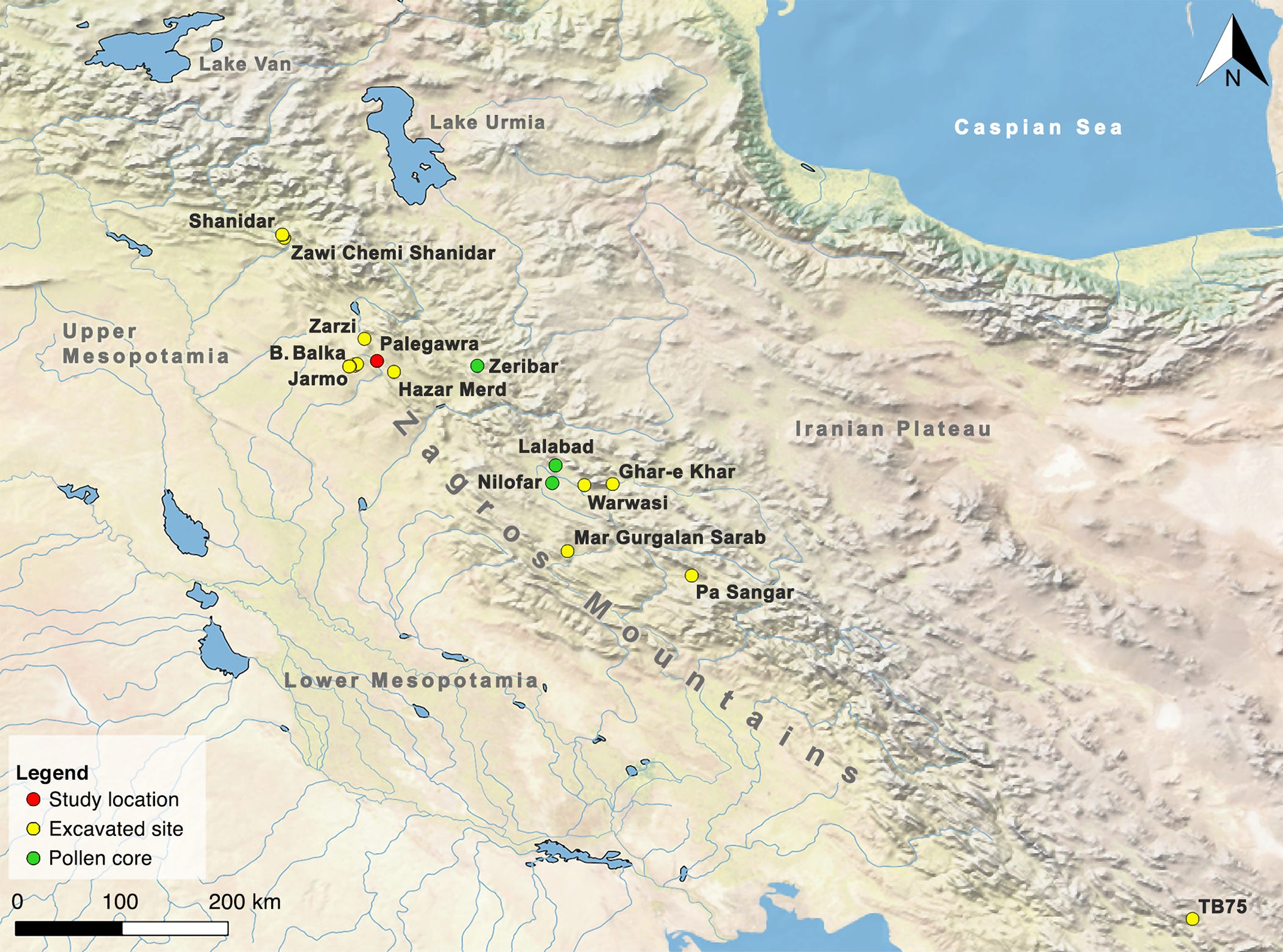
[https://doi.org/10.1371/journal.pone.023956]
A comprehensive study of the Palegawra cave complex in the Zagros mountains offers insights into the routines of hunter gatherers who occupied it seasonally.
The inhabitants engaged in a very broad range of tasks performed on-site including stone and bone tool production, woodworking, hunting, butchery and marrow extraction, plant collection and processing, etc. … [which] underscore the existence of strong continuities in the nature, diversity and technologies of tool use. … Such patterns are often characteristic of ‘persistent places’ — sites containing the cumulative palimpsests of long-term repeated and highly similar uses of particular locales … Their assemblages, representing time-averaged behavioural signals accumulated over successive human generations and at millennial timescales, are thus strongly suggestive of enduring connections … and repetitive practices recursively constructing community identity and coherence. … Caves and rock-shelters located on the piedmont ridges adjacent to river valleys and plains … were repeatedly occupied over several millennia. … The prevailing Epipalaeolithic habitation pattern in the Zagros (centred on moderately long, generalised occupations of small caves and rock-shelters alongside ephemeral, task-oriented occupations of camps) remained an enduring characteristic of the Zarzian horizon throughout the late Pleniglacial and the Lateglacial. [Eleni Asouti et al 2020]
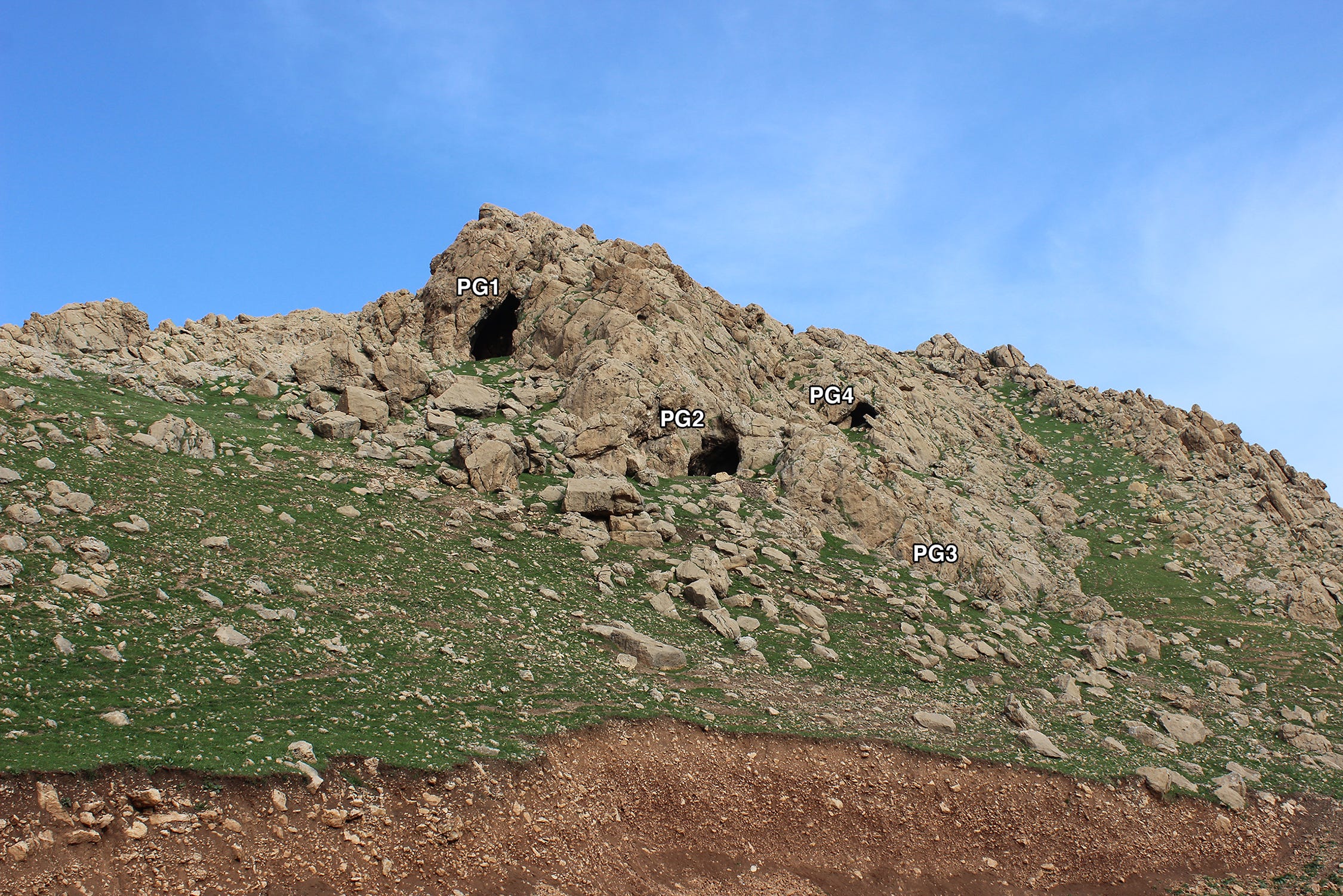
[Photo of the Palegawra cave complex in the Zagros mountains]
Lives, subsistence and mobility were shaped by the seasons. In the winter months groups stayed in the lowlands, valleys and sheltered foothills while hunting mature goats and drawing on caches of nuts and seeds that had been gathered in autumn. In springtime they followed the goat herds that migrated back into more elevated zones and gave birth. Springtime was the time of greatest mobility. As summer approached they sought out the higher and cooler slopes with the greatest animal herd density. At this time they also had access to plentiful fruit and berries. With less pressure to keep warm, there was more time for making and maintaining tools and other materials.
This brief identification of place and time will help the visualisation of sociations.
[END OF ESSAY]
Top illustration
Sidney Nolan, Burke and Wills at the Gulf, Australia 1961
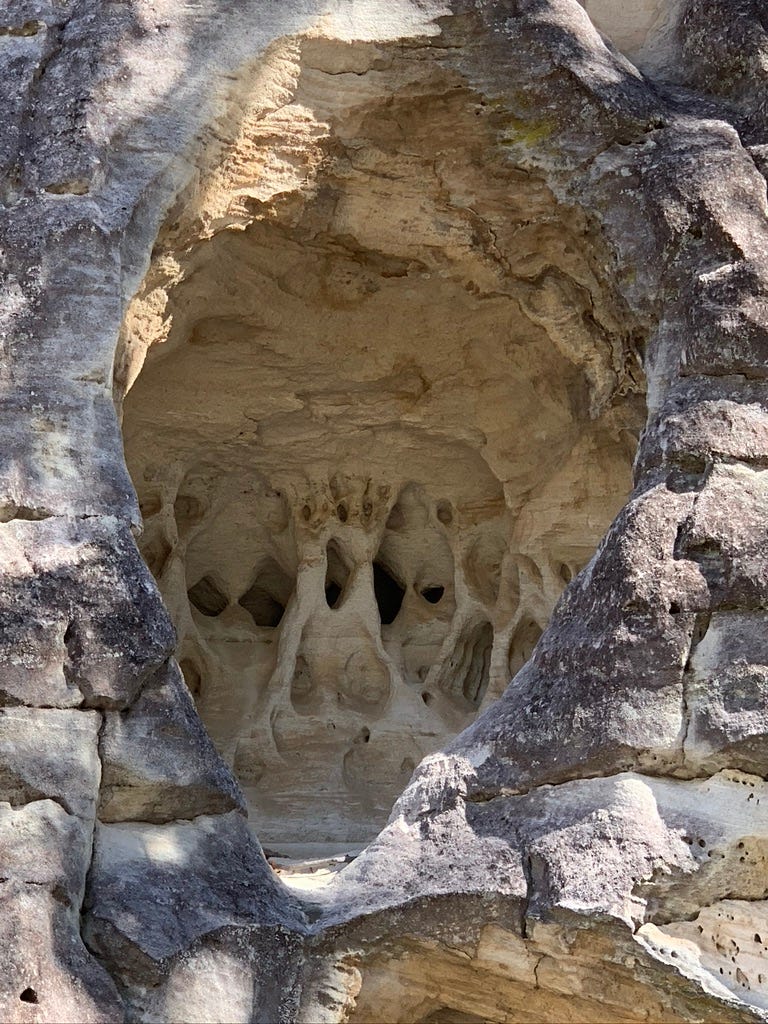
I have discovered some cool caves during my explorations in the Australian outback.
Primary references
Hans J. Nissen, Early History of the Ancient Near East, 9000-2000 BC, University of Chicago Press 1990
Reuven Yeshurun, ‘Thin on the mountainous landscape: The Late Pleistocene zooarchaeology of the southern Caucasus, Zagros, and Alborz’, Quaternary Science Reviews, Volume 357, 1 June 2025, 109325 https://doi.org/10.1016/j.quascirev.2025.109325
Asouti E, Baird D, Kabukcu C, Swinson K, Martin L, Garcia-Suarez A, et al. (2020) The Zagros Epipalaeolithic revisited: New excavations and 14C dates from Palegawra cave in Iraqi Kurdistan. PLoS ONE 15(9): e0239564. https://doi.org/10.1371/journal.pone.0239564
Secondary sources (by publication year)
Juan Rofes, Emmanuelle Stoetzel, Jamshid Darvish, Roya Khazaeli, Morteza Djamali, Amaia Ordiales, Katsuhiko Ohnuma, Akira Tsuneki, Marjan Mashkour, Evolving landscape and cultural change during the Middle Palaeolithic in Southeast Zagros (Iran): Insights from a micromammal assemblage, Quaternary Science Reviews, Volume 333, 2024, 108657, 0277-3791, https://doi.org/10.1016/j.quascirev.2024.108657.
Shoaee Mohammad Javad , Vahdati Nasab Hamed , Storozum Michael , Frenzel Peter , Akhavan Kharazian Mohammad , Fernandes Ricardo , Hashemi Seyed Milad , Jayez Mozhgan , Amano Noel , Marzban Abbasabadi Behrokh , Aalipoor Mehdi , Lucas Mary , Marzo Sara , Ilgner Jana , Patalano Robert , Roberts Patrick , Boivin Nicole , Petraglia Michael, Initial Upper Paleolithic in the Zagros Mountains, Frontiers in Earth Science, Volume 12 - 2024 https://www.frontiersin.org/journals/earth-science/articles/10.3389/feart.2024.1352099 DOI=10.3389/feart.2024.1352099
Catherine Kuzucuoǧlu et Suzanne Leroy, « Geographic and geomorphologic context of Caspian Sea level fluctuations over the Late Pleistocene and Holocene », Quaternaire, vol. 34/2 | 2023, 71-92.
de Groene D, Fazeli Nashli H, Matthews R. The Epipalaeolithic–Neolithic transition in north-eastern Iran: zooarchaeological evidence from the southern shores of the Caspian Sea. Antiquity. 2023;97(393):541-556. doi:10.15184/aqy.2023.37
Kabukcu C, Hunt C, Hill E, et al. Cooking in caves: Palaeolithic carbonised plant food remains from Franchthi and Shanidar. Antiquity. 2023;97(391):12-28. doi:10.15184/aqy.2022.143
Blanco-Lapaz, A., Mata-González, M., Starkovich, B.M. et al. Late Pleistocene environments in the southern Zagros of Iran and their implications for human evolution. Archaeol Anthropol Sci 14, 161 (2022). https://doi.org/10.1007/s12520-022-01615-1
Mario Mata-González, Britt M. Starkovich, Mohsen Zeidi, Nicholas J. Conard, New zooarchaeological perspectives on the early Upper Paleolithic Rostamian sequence of Ghar-e Boof (southern Zagros Mountains, Iran), Quaternary Science Reviews, Volume 279, 2022, 107350, ISSN 0277-3791, https://doi.org/10.1016/j.quascirev.2021.107350.
Kourosh Roustaei, Bernard Gratuze,, Eastward expansion of the Neolithic from the Zagros: Obsidian provenience from Sang-e Chakhmaq, a late 8th-early 7th millennia BCE Neolithic site in northeast Iran, Journal of Archaeological Science: Reports, Volume 29, 2020, 101969, ISSN 2352-409X
Vahdati Nasab, Hamed & Nikzad, Meisam & Jayez, Mozhgan & Hashemi, Milad & Knapp, Zoe & Sykes, Naomi & Khalili, Marzieh & Moghaddam, Hengameh & Nasab, Fariba & Olszewski, Deborah. (2020). Komishan Cave: A Mesolithic and Later Settlement on the Southeastern Shore of the Caspian Sea, Iran. Ancient Near Eastern Studies. 57. 97. 10.2143/ANES.57.0.3288614.
Leroy , SAG, Amini, A, Gregg, MW, Marinova, E, Bendrey, R, Zha, Y, Naderi Beni, A & Fazeli Nashli, H 2019, ‘Human responses to environmental change on the southern coastal plain of the Caspian Sea during the Mesolithic and Neolithic periods’, Quaternary Science Reviews, vol. 218, pp. 343-364. https://doi.org/10.1016/j.quascirev.2019.06.038
Jessica Giraud, Johnny S. Baldi, Stéphanie Bonilauri, Marjan Mashkour, Marion Lemée, Fiona Pichon, Mathilde Mura, Marie-Aliette Pot, Mana Jamialahmadi, Fereidoun Biglari, Kamal Rasheed, Amanj Ameen, Kamal Raeuf, Saber Ahmed Saber, Rafeeq Sofy et Jamal Jameel, « Human occupation along the foothills of Northwestern Zagros during the Late Pleistocene and the Holocene in the Rania and Peshdar plains », Paléorient, 45-2 | 2019, 85-119.
Vahdati Nasab, H., Shirvani, S. & Rigaud, S. The Northern Iranian Central Plateau at the End of the Pleistocene and Early Holocene: The Emergence of Domestication. J World Prehist 32, 287–310 (2019). https://doi.org/10.1007/s10963-019-09133-0
Olszewski, Deborah. (2012). The Zarzian in the Context of the Epipaleolithic Middle East. International Journal of Humanities. 19. 1-20.
Kehl, Martin. (2009). Quaternary climate change in Iran – the state of knowledge. ERDKUNDE, 63(1), 1–17. https://doi.org/10.3112/erdkunde.2009.01.01
Wasylikowa, K. (2005). Palaeoecology of Lake Zeribar, Iran, in the Pleniglacial, Lateglacial and Holocene, reconstructed from plant macrofossils. The Holocene, 15(5), 720-735. https://doi.org/10.1191/0959683605hl846rp