Practical and Political Properties of Property
An unprecedented gap in time for Social Science Files

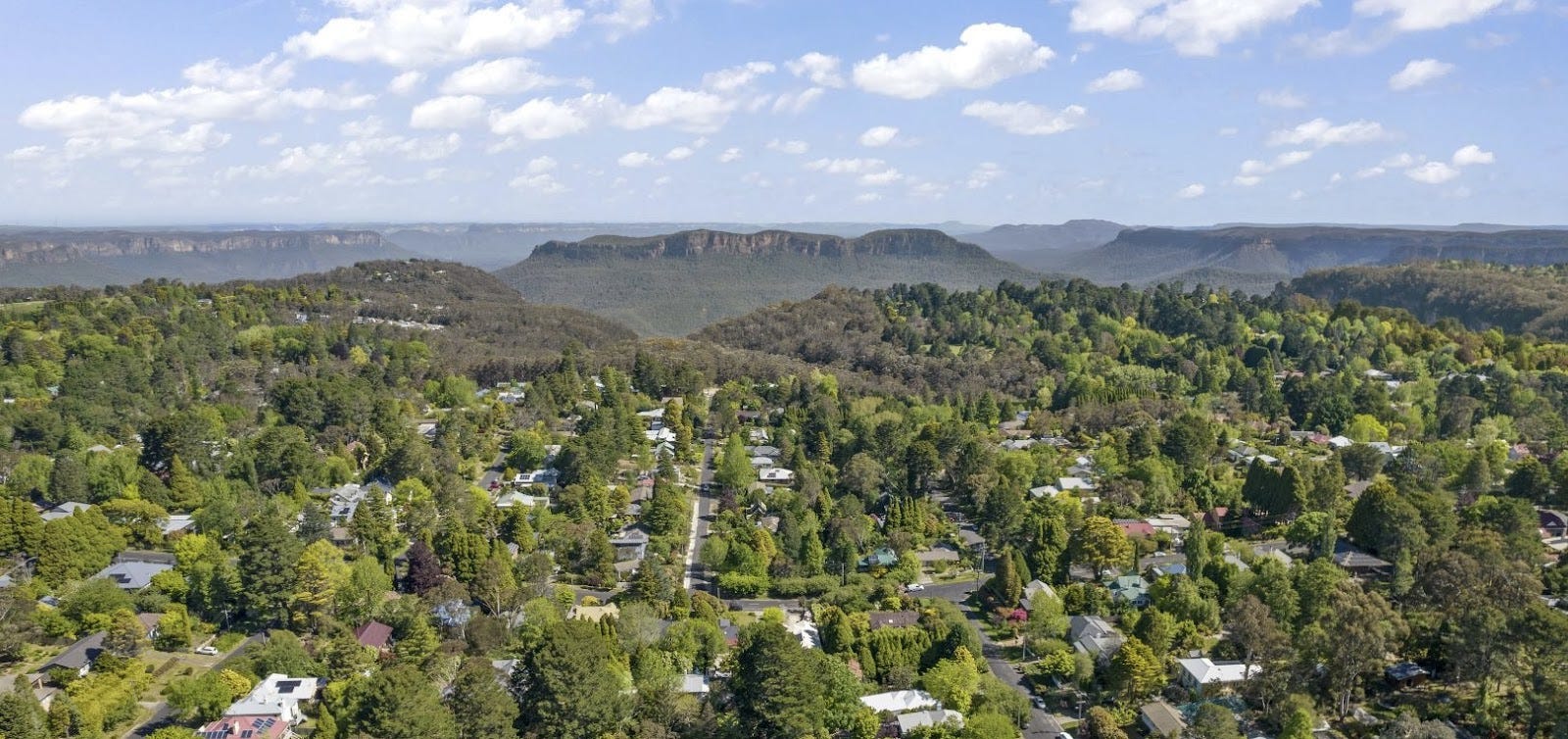
The Theory & History of Society project has been in abeyance while I deal with the practical matters of selling and buying property. If all goes to plan I will over the next few months be moving from an antique house in the Blue Mountains, in this village …
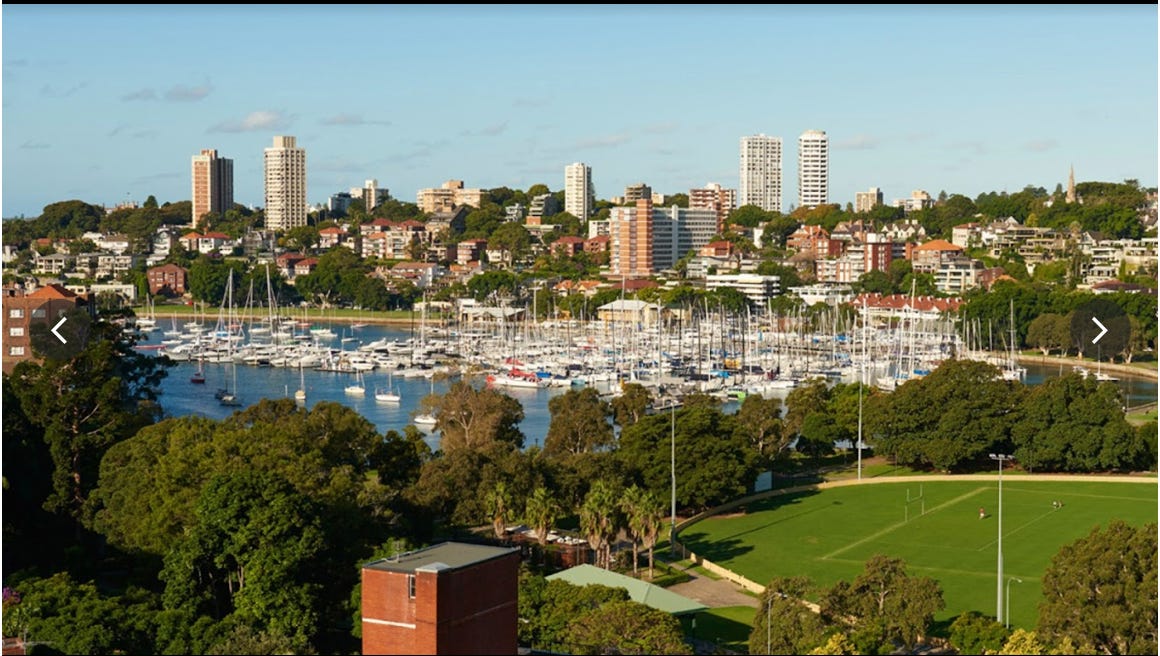
to a modern apartment in Elizabeth Bay Sydney, with this view from the balcony …
The drawing up of contracts and haggling over terms only encouraged me to ruminate further on the prehistoric consciousness of ‘property’ in the evolution of society. Most studies of property rights take rulership and hierarchy as their starting points. They assume that property rights were the result rather than the cause of political action.
Take, for example, the flawed argument of my prior antagonist Douglass North:
“In equilibrium, a given structure of property rights (and their enforcement) will be consistent with a particular set of political rules (and their enforcement). Changes in one will induce changes in the other. But because of the priority of political rules, we will analyse the structure of the political system first. We start with a simplified model of a polity made up of a ruler and constituents. In such a simple setting, the ruler acts like a discriminating monopolist, offering to different groups of constituents protection and justice or at least the reduction of internal disorder and the protection of property rights in return for tax revenue.” [my emphasis]
Rulership hierarchies are not ‘simplified’ enough bases upon which to build ‘history’. On these pages I have suggested instead that the notions of possession developed in the context of sociational coupling which preceded full individualistic-communalistic societies. Property or possession and storage were actually a major cause of politics because rightful possession was one of the earliest topics for ‘political’ discussion.
Prehistoric rules emerged when there arose needs and disputes over possession and the ‘belonging’ of objects, food, children, and closed private spaces. In the context of neoprimate proclivities for ‘domination’ and the corresponding counteractions of the ‘levellers’, a politics of sociation was unleashed. Politics was a vector of progress that instigated the need to differentiate and disagree over possessions, food and rules of social order. It follows that rulership, representation, hierarchy and creation of laws were a slow consequence of increments in group size and economic complexity.
I have further shown why we may confidently intuit the innovation of property rights in storage and land as having been fundamental to progress in economic organisation and house-holding in the coordinated political societies of the Levant circa 15,000-10,000 BCE. Property rights later enabled householders to cooperate in communalistic estates, and were probably the foundations for the agricultural revolution, large-scale settlements and the administered societies of Mesopotamia. Indisputable evidence for the importance of household property emerged through the innovations in Sumerian cuneiform writing that enabled communication of laws and recording of transactions.
Can one write a history with reverse chronology?
There is no possibility of my living in the new property at least until July. Therefore, the output of Social Science Files will be constrained for a few more months. On the other hand, the benefit is that this disruptive material break in a four-year routine of intellectual endeavour is already streamlining new thoughts about how to structure the Theory & History of Society in a way that is efficient and more interesting and intellectually challenging. Having been immersed a long time in prehistory I want to reorient myself toward the starting point of the exercise by reexplaining the climactic outcome of the long evolution represented by the advanced societies. As I wait for the negotiations to materialise as signed contracts I am returning to my starting points — systems theory and the English constitutional revolution of 1641 which produced the first ‘thoroughly modern’ Functionalist Society. I described it in the plan as follows:
Type 8 (T8)
Functionalist. System over system. Differentiation of functional executive, legislative, and judicial powers within modern states creates unique system societies with system states regulated by impersonal codes. Climactic ‘end of history’. Governance functions are separated out. A representative and capitalist state is born. The centre separates internally into ‘equal’ interactive multilayered specialised organisations with genuine representation. General agreement is formally structured and broadly representative.
Every society is somehow symbolically rooted in ‘property’
I will miss my rather rare de-fossilised tree when it is no longer my property.
My proper-tree is a Metasequoia glyptostroboides —
First discovered in Central China in 1945 before which it was only known previously through fossil remains. Known only from a single isolated population in a valley of Western China on the Hubei-Sichuan border. Introduced to cultivation in 1947 it immediately became of world-wide importance and was soon available for cultivation in Australia, being grown in Canberra in 1947 and sold commercially in New South Wales by 1950. Seed sent to the Royal Botanic Gardens Melbourne in Dec. 1947 had grown to 7 m tall trees within 14 years.
This sounds right. My house was built about 1950, when my (now) 103-year old mother emigrated to England, which was 7 years before my birth. In autumn it looks its best.


History is continually in the making upon old roots
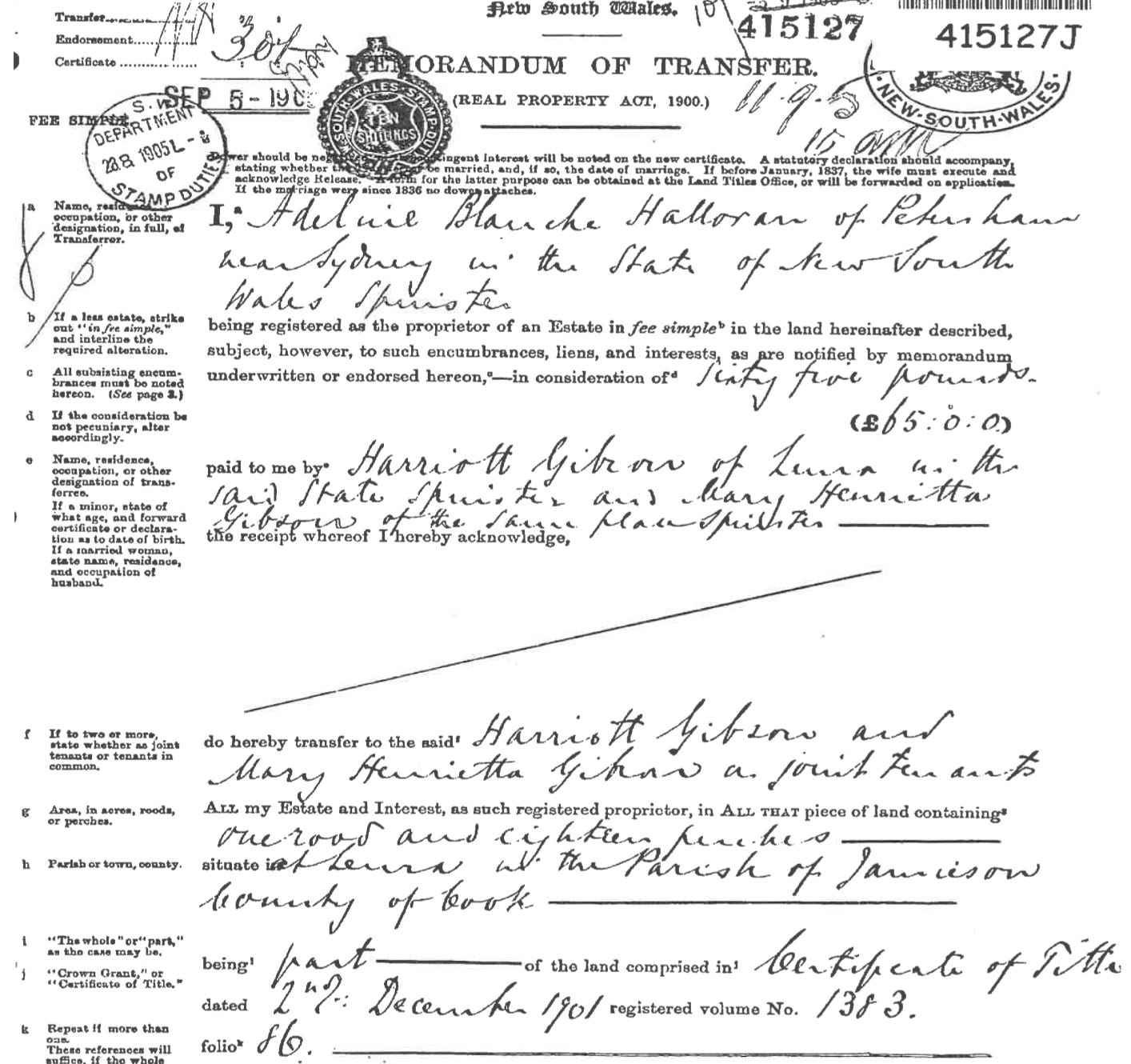
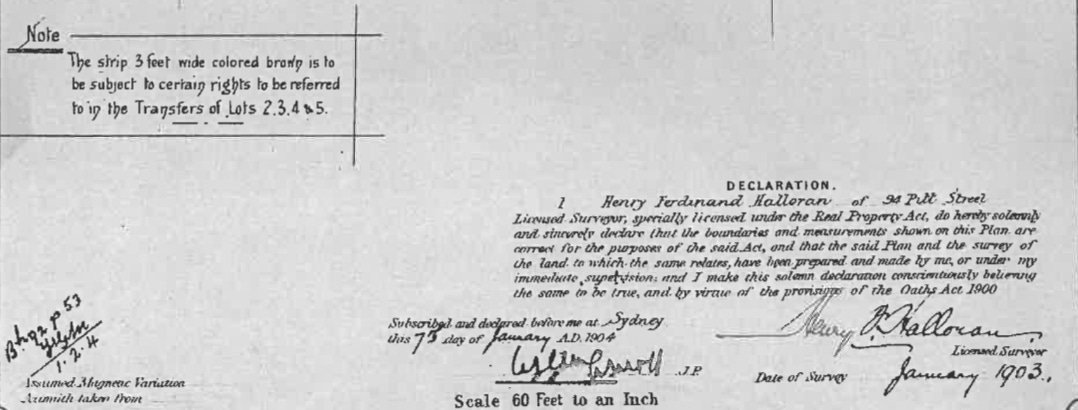
Below are parts of a contract for sale of this same property in 1903.