
Coordinated Societies 15,000-5000 BCE
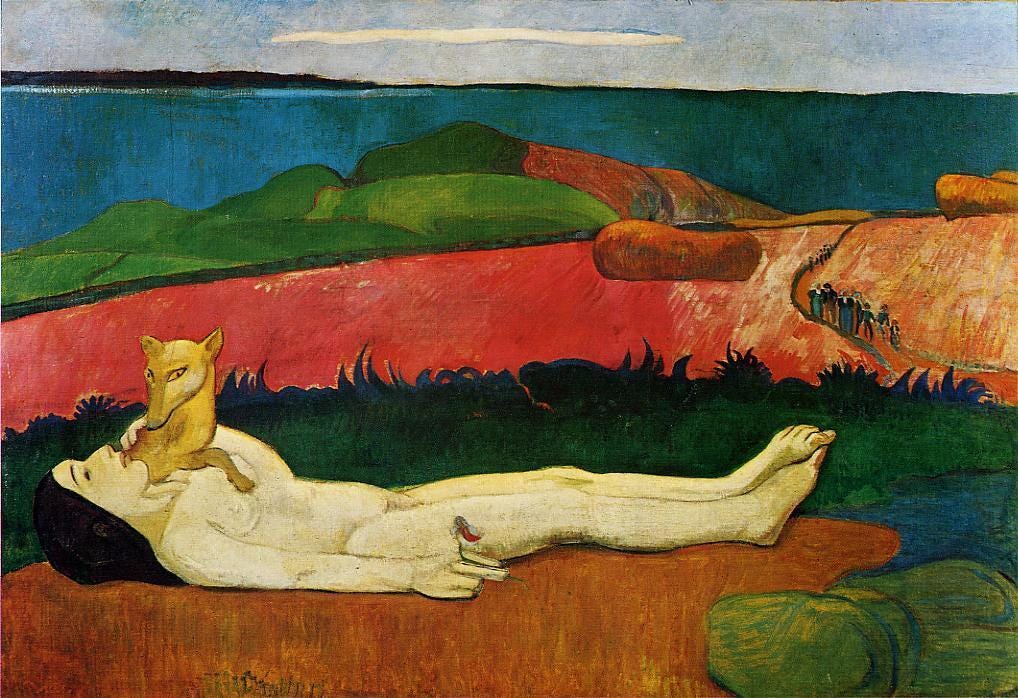
Representing the loss of political virginity

We now depict pre-history at ‘stage three’ — the Coordinated Society. First, we describe the ideal type. Next, we trace its potential origins in Natufian constructed settlements and sociational political economies of the East Mediterranean Levant circa 14,000-10,000 BCE. Then, we test the hypothesis in the semi-recorded Homeric Dark Ages of Greece 1100-700 BCE when coordinated societies reemerged sui generis after the destruction of the ‘stage four’ administered societies of Mycenaean kings.
Pressures towards Structure and Representation
Earlier sections identified two primordial forms of politics associated with the origins and evolution of protolanguage.
The first, the politics of the state of nature, was termed ‘neoprimate domination’. In this form, humanity’s ancestral inheritance continued to impose itself in an essentially animal mode. Some 200,000 years ago, dominant males exercised control over early hominin groups, making the final decisions concerning the obligatory actions and permitted conduct of other members.
The second form was termed ‘networked levelling’. This represented an early and rudimentary attempt to modify the inherited order of nature. Its defining principle, and perhaps its central motivation, was the explicit rejection of dominance. Among its progressive features were the inclusion of women in decision-making and the creation of dispersed decision-making nodes within subgroups and personal cliques, sustained principally through microlevel gossip. At the level of the whole group, however, open contestation continued to be avoided, suppressed, or muted. By restricting overt competition and resisting visible leadership, networked levelling also obstructed the forms of cognitive differentiation and organised experimentation upon which sustained technological change depended.
Natural selection for survival was already operating within both systems in an advanced cerebral sense. Political behaviour had become deliberative and intellectual rather than merely instinctual, sexual, emotional, or physical. Once language had emerged, both arrangements could be explained and justified, whether on grounds of efficiency, order, or fairness. Leadership and competition had become objects of consciousness. Neoprimate domination accepted them as the natural foundations of social order; networked levelling subjected them to suspicion and restraint.
Neither path, however, was fully compatible with sustained cognitive and technological development. Both survive, in attenuated forms, at the economic and political margins of the modern world, where they persist (neglected or celebrated) as cultural relics.
Society properly so called first appeared when small groups established forums in which the whole group could participate in the competitive selection of decisions. Leadership was no longer demonstrated and maintained primarily through violence, nor concealed within the shadowlands of personal networks and cliques. It was instead displayed openly through the exercise of capacities whose effects could be publicly assessed: the relative accuracy of a person’s knowledge, the quality of his or her diagnosis, and the ability to identify appropriate relationships between means and ends. Intelligence and rationality consequently acquired conscious and instrumental social value.
Leadership also accrued to those most capable of communicating facts, arguments, and judgements. Such capacities were not evenly distributed. They reflected differences of age, physique, temperament, experience, and personality, as well as variations in memory, reasoning, and verbal articulation.
This was nature reformed rather than nature eliminated. By approximately 50,000 years ago, politics had already come to depend upon the deliberate exposure and utilisation of biologically grounded differences among individuals, particularly differences in their respective capacities to acquire, organise, communicate, and apply knowledge.
As dynamic groups survived and expanded, the initially ‘individualistic’ basis of competitive decision-making gradually assumed a more ‘communalistic’ form. Groups continued to deliberate as wholes and to decide contentious questions in collaboration, while preserving the humour, reciprocity, and constructive relationships upon which their cohesion depended. By approximately 20,000 years ago, a new equilibrium of nature had begun to emerge. Leadership was increasingly structured through agreed divisions of labour in the preparation, formulation, and implementation of common decisions.
The present objective is to reconstruct the probable character of this evolutionary structuring of leadership through early devices of ‘representation by delegation’. The immediate catalyst for the transition from individualistic to communalistic society may have been a substantial increase in the number of sociated persons, perhaps from groups of twenty-five or fifty to aggregations of one hundred or one hundred and fifty.
Sociational progression now consisted in the addition of structural representation. Functional subgroups were formed to prepare proposals requiring specialised knowledge, experience, or interest. This innovation substantially enlarged the range of activities through which competitive leadership could be exercised.
Disagreement and opposition continued to be conditioned by differences of sex, age, personality, physique, and intelligence. During the transition from individualistic to communalistic society, especially between approximately 15,000 and 5000 BCE, however, the central causal dynamic lay in the structuring of the levels at which leadership might legitimately be exercised. Leadership could now operate within a specialist subgroup, between subgroups, or before the assembled community.
In its earliest form, communalistic leadership through representation was neither systematic nor theoretically understood. It was an intuitive response to group enlargement, increasing political complexity, and pressure upon time. The expanded opportunities for leadership created by structured representation became apparent only gradually. Different groups, often without connection to one another, discovered and rediscovered the same organisational sequence for themselves.
The process, from beginning to end, was one of delegation.
Even mobile societies could be driven towards delegation once the group exceeded the number capable of maintaining a physical and political presence within the traditional campfire circle. A gathering of one hundred persons, for example, may already have strained the limits of direct visibility, audibility, and sustained participation.
There were, however, still more compelling reasons for representation. Mobile foragers operated within severe time budgets and faced fluctuating demands upon labour in uncertain natural environments. Where climatic, geographical, and resource conditions favoured settlement, and where it became feasible either to replace mobile foraging with stationary camps or to combine the two within a seasonal cycle, much larger groups could coalesce.
The movement towards sedentism was inseparable from the increasing sophistication of human cognition for sociation. It was both supported and driven by accumulated subsistence knowledge, experience of decision-making processes, and the invention and use of increasingly specialised tools.
Within groups of between one hundred and three hundred persons, the advantages of partitioning utilitarian and deliberative activities became increasingly evident. Specialist gatherers might meet separately to distinguish edible plants from poisonous ones. Hunters might confer about animal movements or the timely relocation of camps and hunting parties. Healers could compare treatments for injury and illness. Warriors might formulate defensive and offensive strategies. Toolmakers could investigate new materials, techniques, and designs. Those whom we may provisionally call philosophers might debate moral obligations, cosmological questions, and alternative orders of existence. Others of a more practical disposition would have focused on establishing explicit rules to be followed for the purpose of maintaining social order.
Once such groups had reached their specialised preliminary conclusions and formulated their proposals, the wider political, economic, social, secular, or spiritual implications could be tested before the full assembly of adults.
Communalistic society thus practised a form of ‘descending internal representation’. The whole group delegated the preparatory stages of decision-making to specialist subgroups, while reserving final judgement to itself. This arrangement was not yet highly organised. It nevertheless constituted a logical institutional step towards making better use of scarce time and managing the growing complexities of subsistence, social order, and common security.
Larger communalistic societies regularised innovations inherited from smaller individualistic societies. In doing so, they created representational mechanisms capable of facilitating the absorption of newcomers. Once the principle of representation by delegation had been mastered, enlargement became considerably easier.
The legitimacy of communalistic society no longer depended upon every adult member being present during every stage of every deliberation. Individuals continued to acquire and lose leadership status through contests of persuasion before both subgroups and the whole community. Final decisions, however, still required some public demonstration of common approval, perhaps through a show of hands, acclamation, physical alignment, or another visible expression of consent.
This arrangement generated an important epistemological dynamism. Once the competitive ‘process of deciding’ became stable and predictable, the substantive outcomes of that process could become less predictable and potentially more creative. Institutional continuity in the processes of deciding permitted intellectual variation.
The material advantage was equally significant. By employing a rudimentary system of specialised preparatory representation, societies could reduce the frequency or duration of full-group meetings. Time was thereby released for the life-sustaining and life-improving labours of subsistence, shelter, security, and social order.
Individualistic and communalistic societies were, in this respect, functional successors to the pre-societal forms of domination and levelling. The next phase in the proposed evolutionary lineage is the ‘coordinated society’.
Individualistic and communalistic societies continued to operate according to broadly similar participatory principles. The transition between them nevertheless revealed a substantial advance: the capacity to represent larger numbers while preserving biologically individualistic methods of governance without reverting either to dominance or to the suppression of leadership through levelling.
Only with the third form, however, did governance become structured in the stronger sense.
An Ideal Type of Coordinated Society
An initial ideal type of the coordinated society may now be presented in logically hypothetical terms. It should be understood as a transitional stage in the continuing development of human sociation rather than as a description of every early settlement.
The coordinated society arose initially as a concomitant of settlement. Hunter-gatherers ceased, interrupted, or seasonally regulated their territorial mobility. Populations coalesced at a single site or within a closely connected network of sites. Habitation structures were built for kin groups, while communal buildings were constructed for meetings, storage, ritual, or other common purposes.
The decisive sociational transition associated with settlement was the creation of the ‘house’ as a socioeconomic and political unit. Some houses subsequently enlarged more rapidly than others according to differences in organisational competence, productivity, initiative, and accumulated merit. Alongside this differentiation there emerged an ascending delegation of decision-making responsibility to representatives of the more entrepreneurial households.
Over time, the heads of the largest, most dynamic, or most prosperous houses were likely to be selected, recognised, or accepted as leading representatives.
In small and relatively intimate societies, material prosperity could confer legitimate leadership only where wealth was regarded as evidence of personal qualities demonstrated over a lifetime. Within a transparent and well-functioning coordinated society, possession of property might be trusted as a tangible reflection of wisdom, character, effort, competence, and achievement.
In earlier societies, such leadership qualities had been revealed individualistically through skill, productivity, reliability, integrity, and, above all, useful oratory that contributed to effective group discussions. Under settled conditions, accumulated property became an additional and more durable sign of the same capacities. Wealth was not a substitute for merit, but it could operate as its material record.
Sociational coordination was enabled, and increasingly required, by the conjunction of population growth, economic opportunity, new forms of skilled activity, and the demands of settlement and construction. The possibility had arisen of satisfying most, if not all, nutritional, residential, and security requirements on a sustainable basis within a defined territory. This offered a viable alternative to traditional mobile foraging.
A further pressure towards coordination arose when the group became too large for all members to see and hear one another within the circumference of the campfire circle. The physical limits of direct deliberation became political limits. Beyond a certain scale, participation had to be mediated if it was to remain effective.
The corollary of settlement was the formation and consolidation of households. With households came an intensification of the importance of property. Sedentism also encouraged more elaborate and multilayered divisions of labour, both within and between houses.
Storage became a central component of the cyclical planning required to sustain the political economy of subsistence. Once tools, raw materials, food reserves, and objects of utility no longer had to be transported continually across large distances, wider opportunities emerged for accumulation, experimentation, and complex material processing. The incentives to produce durable, specialised, or aesthetically valued objects increased correspondingly.
Taken together, these conditions exerted pressure for a change in political structure. The result was not necessarily a hierarchy of domination and control, still less a developed apparatus of coercive power and authority. It was, rather, an institutionalised consent to representation.
The components of this stage may therefore be said to mark the fateful loss of political virginity. Common discussion became formally divided and structurally differentiated. Functions that had previously been performed intermittently by shifting individuals or temporary subgroups were now entrusted to a relatively stable representational stratum.
Coordination entailed greater autonomy for representatives and thereby consolidated the first durable structure of politics. Eventually, political activity could be housed within a higher assembly supplementary to the broader forums of formulation, consultation, and feedback in which households continued to participate.
Where settlements became too large for universal attendance, a household might be represented at meetings only by its male head. The legitimacy of this arrangement depended upon regular and meaningful consultation between the many houses and the relatively few representatives. The pursuit of communal rather than narrowly individual interests remained the defining principle and indispensable condition of primitive representation.
This development also constituted a loss of innocence in a second sense. The dynamics of house-holding reintroduced male dominance into everyday life.
Large-scale divisions of labour within settled households weakened the comparatively easygoing partnerships of male-female coupling that had characterised earlier individualistic and communalistic societies. Within those earlier arrangements, men and women had participated as joint but substantially self-representing units, negotiating and compromising with one another within the wider context of public deliberation.
In the coordinated society, by contrast, the household was no longer merely a partnership. It became an enterprise, a manufacturing and distributive unit, a farm, a storage organisation, and, where necessary, a military garrison. The householder assumed the roles of chief administrative executive, economic director, and generalissimo. Within the household, he occupied a legitimately commanding position of a kind perhaps not witnessed since the primate and pre-hominin forms of dominance.
Archaeological evidence from burial sites associated with settlements of the kind identified here as coordinated societies clearly indicates differentiation in wealth. Yet it would be mistaken to infer directly from such differentiation the existence of a coercive hierarchy exercising power and authority over society as a whole.
The reverse interpretation may, in some cases, be more plausible.
The social-scientific logic of coordination through representation suggests that durable differences in wealth between households might have constituted political rewards for effective representation, economic rewards for entrepreneurship, or some combination of the two. Dynamically experimental and inventive households could accumulate resources through superior organisation, innovation, and production. Alternatively, representatives might become wealthier because the community supported or compensated them for undertaking difficult and time-consuming tasks of diplomacy, planning, arbitration, or defence.
Those who became representatives may therefore have entered public responsibility because they were already prosperous through entrepreneurship. Equally, they may have become more prosperous because they were, in effect, paid to perform the conscientious labour of representation.
This conclusion follows from the historical sequence proposed here. Given the trajectory of social evolution already outlined, there are insufficient grounds for assuming that early representatives had acquired either an ‘authority to control’ or a ‘power to compel’ obedience.
Within the present schema, hierarchy does not become a genuine indicator of evolutionary success until the appearance of mass administration in conjunction with the agricultural revolution. Where hierarchy survived earlier among isolated neoprimate chiefs, it would have remained politically alienating and functionally premature from the evolutionary standpoint of sociation.
The representational responsibilities granted by small coordinated societies to demonstrably capable men were probably concentrated upon external and society-wide concerns. These included diplomacy, warfare, relations with neighbouring communities, territorial strategy, food security, health, and the maintenance of social order.
Representatives would have intervened in the internal conduct of households only where that conduct affected neighbouring houses or the security and welfare of the settlement as a whole.
The creation of a peak assembly of leading householders also imposed additional labour upon those selected. Representatives who assumed responsibility for diplomacy, strategy, major disputes, or common planning had to delegate some of their ordinary work—farming, storage, craft activity, or the management of minor conflicts—to deputies or dependants.
Such an arrangement presupposed a considerable degree of pre-existing respect for those chosen to represent the whole. Here a paradox becomes visible. The household itself became more hierarchical and authoritarian, while the encompassing society remained essentially communalistic in its relationship with its delegated coordinators.
To restate the point, wealth and status differences may often have resulted from successful economic entrepreneurship. They may also have included a material premium or commission granted to authorised representatives. Such wealth could be understood as a practical and aesthetic reward for the contribution of lifetime experience, intelligence, physical capacity, courage, or force of personality to the affairs of the settlement as a whole.
This was ‘ascending delegation’. Its roots and underlying logic lay in the descending delegation already characteristic of communalistic societies. In the earlier form, the whole community delegated preparatory work downwards to specialist subgroups. In the coordinated society, households delegated selected responsibilities upwards to representatives and assemblies.
The structural function of both forms was essentially the same. Each relieved the wider society of part of the labour of governance—the collection of information, the comparison of alternatives, design, negotiation, and planning—so that most members could devote a greater share of their restricted time to the implementation of subsistence, security, shelter, and social order.
This phase of coordination preceded the subsequent development of more intensive and expansive internal household administration. It also preceded the joint action of exceptionally organised households within larger communal enterprises or estates. From approximately 5000 BCE onwards, as we will later see, householders began to create administered agricultural societies and, eventually, monarchies.
In the earliest and simplest coordinated society, traditions of demonstrable individual superiority were combined with the participatory communalism of earlier and smaller societies. We do not yet find a developed principle of rotation in office or selection by lot. The criteria of selection remained competitive, and competition continued to be conditioned by differences of age, sex, intelligence, physique, experience, and personality.
In its new structured form, society selected, recognised, or at least consented to representatives. It retained rights of recall, whether explicitly defined or exercised through withdrawal of support. Periodic meetings were probably held in the immediate vicinity of the larger households or within communal buildings, thereby renewing the participatory processes through which approval was demanded and legitimacy conferred.
The autonomy of the representative remained structurally limited. His effectiveness was measured not by the subjection of the population but by his capacity to release others from excessive burdens of direct political participation. Representation enabled the majority to pursue their occupations within severe time constraints. It also facilitated the expansion of settlements in which economies of scale and more complex divisions of labour became possible.
As in communalistic society, representatives often represented particular bodies of knowledge and accumulated experience rather than relying solely upon generalised individual qualities. Yet coordinated societies added something new to competition and leadership: they established defined periods, responsibilities, and social locations for specialisation.
Representatives could serve as regulated means of bridging divisions between subgroups, households, or clustered settlements. Representation could also generate positive inequalities by fostering cognitive elites with the incentives, resources, and leisure necessary to acquire specialist expertise in different fields.
Specialisation thus became a feature of societies capable of supporting individuals who had been formally delegated to cultivate it. Taken together, these developments could improve social organisation. Provided that effective checks and balances were maintained, structures of representation might even operate impersonally in pursuit of the common good.
None of this implies that politics was displaced to the margins of life for the majority. On the contrary, the sharp increase in population density accompanying settlement, together with innovations in the management and domestication of animals, created additional layers of political concern. These demanded sustained attention, extensive information gathering, and continual discussion.
Some of the problems and advantages associated with settlement are now theorised under the general heading of ‘scalar stress’. 1
Other difficulties arose from new conceptions and realities of property ownership, inheritance, household membership, and child labour. Among the possible benefits were improvements in food supply, nutritional security, and fertility.
At no stage need these developments have produced a marked decline in political engagement. Representation altered the form and distribution of participation; it did not eliminate the political character of social life.
Health, in particular, was adversely affected and rendered more complex by crowded living conditions. Humans lived in closer proximity not only to domesticated or managed animals but also to commensal species such as rodents and birds. Archaeological evidence indicates that pathogens and pathologies proliferated under such conditions. 2
These threats required innovations in house design, waste disposal, water management, spatial organisation, and hygiene. Such measures had to be formulated, discussed, agreed upon, and probably enforced as indispensable elements of social order.
The negative psychological consequences of ill health, crowding, conflict, and socioeconomic pressure might be alleviated through song, dance, storytelling, ritual, and ceremonial activity. Yet neither ceremonial integration nor emotional consolation could substitute for continual adaptation in the methods of governance.
The legitimacy of the coordinated society, and its effectiveness in making decisions vital to common survival, depended upon a dynamic politics: a politics capable of creating structure without domination, specialisation without political exclusion, and representation without the surrender of communal consent.
Illustration
Paul Gauguin, The loss of virginity (Awakening of spring), 1891 French Polynesia
Johnson GA (1982) Organizational Structure and Scalar Stress. In: Renfrew C, Rowlands MJ, Segraves BA, editors, Theory and explanation in archaeology, New York: Academic Press; Alberti G (2014) Modeling Group Size and Scalar Stress by Logistic Regression from an Archaeological Perspective. PLoS ONE 9(3): e91510. doi:10.1371/ journal.pone.0091510; Dunbar RIM. Managing the stresses of group-living in the transition to village life. Evol Hum Sci. 2022 Sep 13;4:e40. doi: 10.1017/ehs.2022.39. PMID: 37588930; PMC10426039.
Goring-Morris, A. N. & A. Belfer-Cohen. 2010. ‘Great Expectations’, or, the Inevitable Collapse of the Early Neolithic in the Near East. In M.S. Bandy & J.R. Fox (eds.), Becoming Villagers. Comparing Early Village Societies. Pp. 62-77. Amerind Studies in Archaeology, University of Arizona Press, Tucson